Quantum Research in the College of Science
The emerging quantum economy—powering advances in computing, materials, sensors, communications, and energy—demands rare breadth of expertise. College of Science researchers are meeting that challenge, driving new technologies while building the talent pipeline this industry needs.
Training Tomorrow's Quantum Leaders
Through its Science Research Initiative, the College of Science supports undergraduate research across the college.
In quantum technologies, we currently have teams of students working in the areas of Quantum Materials and Quantum Sensing.
 View Noah's Bio

Noah Conner
Class of 2025, Researched nanoscale spintronic devices

Noah Conner
Class of 2025, Researched nanoscale spintronic devices
Noah Conner graduated in May 2025 and went on to receive the DOE Computational Science Graduate Fellowship, one of the most prestigious and generous graduate awards in the U.S. for science and engineering. While at the U, Noah used micromagnetic simulations to study nanoscale spintronic devices that use spin-orbit interactions to generate magnetic oscillations. Understanding these nanoscale spin dynamics is
important for developing future spin-based and quantum technologies. "My research experience taught me many technical skills, but most importantly, it connected me with the people who made my career in computational physics possible.”
View Aysha's Bio

Aysha Ahmad
Class of 2027, Researches spin electronics in organic semiconductors
Aysha Ahmad
Class of 2027, Researches spin electronics in organic semiconductors
Through the College of Science’s Science Research Initiative, Aysha Ahmad joined the laboratory of Professor Christoph Boehme in the Department of Physics & Astronomy. Aysha, who expects to graduate in May 2027, is majoring in Health, Society and Policy, with minors in Chemistry and Pediatric Clinical Research. Her research has focused on spin electronics in organic semiconductors. She fabricates and tests thin-film devices to investigate how electron spin In the News
Quantum Science & Technology Symposium
The University of Utah convened faculty, students, postdoctoral scholars, industry partners, and national leaders in science and engineering for its Quantum Science & Technology Symposium on April 24 in the Crocker Science Center.
Read full article about Symposium
U selected for elite national network of AI-driven ‘cloud laboratories’
The University of Utah has been selected by the U.S. National Science Foundation to build one of the nation’s 20 Programmable Cloud Laboratory Nodes, a new class of research facility where scientists and AI agents anywhere in the country can design, run and analyze real experiments over the internet.
Read more about cloud laboratories
‘Brand new physics’ for next generation spintronics
Our data-driven world demands more—more capacity, more efficiency, more computing power. To meet society’s insatiable need for electronic speed, physicists have been pushing the burgeoning field of spintronics.
Read more about Spintronics
Faculty Expertise
View Valy's Bio
Physics & Astronomy
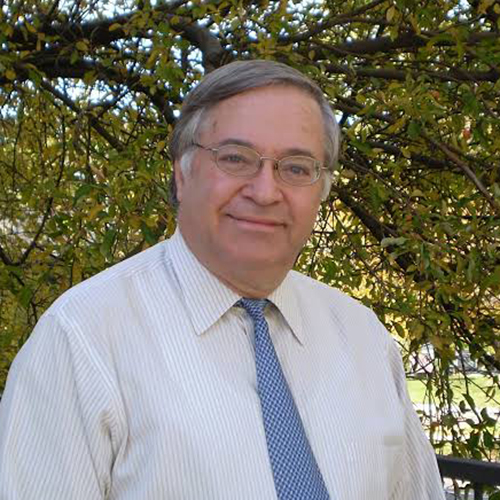
Valy Vardeny
Physics & Astronomy
Dr Vardeny studies how electron spin, a quantum property that makes each electron behave like a tiny magnet, travels through handed quantum materials, whose structure comes in left- and right-handed forms. Controlling spin this way is central to a coming generation of devices that carry information with spin rather than electric charge.
View Valy's Faculty profile
View Shanti's Bio

Shanti Deemyad
Physics & Astronomy
Shanti Deemyad
Physics & Astronomy
Dr Deemyad squeezes materials under pressures far greater than those at the center of the Earth. Packed that tightly, atoms take on entirely new electronic and magnetic behavior, including quantum effects such as superconductivity, in which electricity flows with no loss at all. Her experiments help identify materials for future quantum technologies.
View Shanti's faculty profile
View Joel's Bio
Joel Brownstein
Physics & Astronomy
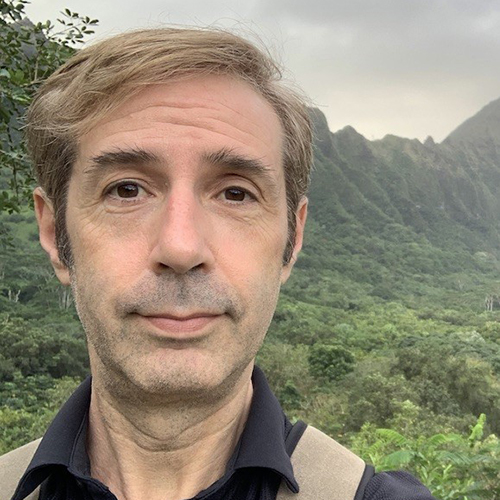
Joel Brownstein
Physics & Astronomy
Dr Brownstein works on one of the hardest unsolved problems in physics: making Einstein's theory of gravity agree with quantum mechanics, the rules that govern matter at its smallest scales. Working in a framework called quadratic quantum gravity, he follows that question through the birth of the universe and the interiors of black holes.
View Joel's Faculty profile
View Eric's Bio

Eric Montoya
Physics & Astronomy
Eric Montoya
Physics & Astronomy
Dr Montoya grows magnetic thin films and fabricates them into nanoscale devices to study electron spin, the quantum property that makes each electron behave like a minuscule magnet. His group examines how electrical currents can push those spins around, work that underpins emerging spintronic devices for memory, wireless communication, and brain-inspired computing.
View Eric's faculty profile
View Ryan's Bio

Ryan Steele
Chemistry
Ryan Steele
Chemistry
Dr Steele's group simulates molecules on computers using the equations of quantum mechanics, the physics that governs matter at the scale of atoms. The simulations show how molecules move, vibrate, and react from the inside out, in a level of detail that laboratory experiments alone cannot capture.
View Ryan's faculty profile
View Luisa's Bio

Luisa Whittaker-Brooks
Chemistry
Luisa Whittaker-Brooks
Chemistry
Dr Whittaker-Brooks builds new organic and inorganic materials and studies the boundaries where they meet, where electric charge and quantum spin are injected, carried, and detected. Her group's recent work looks at chiral phonons, a twisting form of atomic vibration, and how they steer charge and spin through quantum and energy materials.
View Luisa's faculty profile
View Andrey's Bio
Andrey Rogachev
Physics & Astronomy
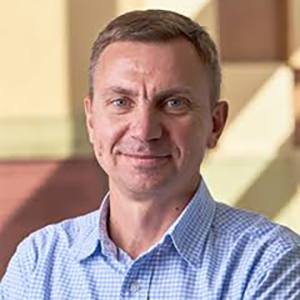
Andrey Rogachev
Physics & Astronomy
Dr. Rogachev studies quantum phenomena in superconducting nanowires and develops components for quantum devices, including single-photon detectors and qubits. His group also develops classical analog electronic emulators of quantum computers that reproduce quantum algorithms using electrical waves, with potential applications in high-speed analog computing and artificial intelligence. Area of Study Physics & Astronomy.
View Andrey's Faculty profile
View Oleg's Bio

Oleg Starykh
Physics & Astronomy
Oleg Starykh
Physics & Astronomy
Dr Starykh builds theoretical models of quantum magnets, materials in which the magnetic spins of individual electrons interact in strange and highly collective ways. Because these systems are hard to predict by intuition alone, his models guide the laboratory experiments that test them, including neutron scattering studies of how the materials actually behave.
View Oleg's faculty profile
View Christoph's Bio

Christoph Boehme
Physics & Astronomy
Christoph Boehme
Physics & Astronomy
Dr. Boehme studies how an electron’s quantum spin influences the flow of electricity through a material. His lab develops highly sensitive electrical methods to detect and coherently control very small groups of spins - capabilities needed for quantum sensing and quantum-information technologies.
View Christoph's faculty profile
View Akil's Bio
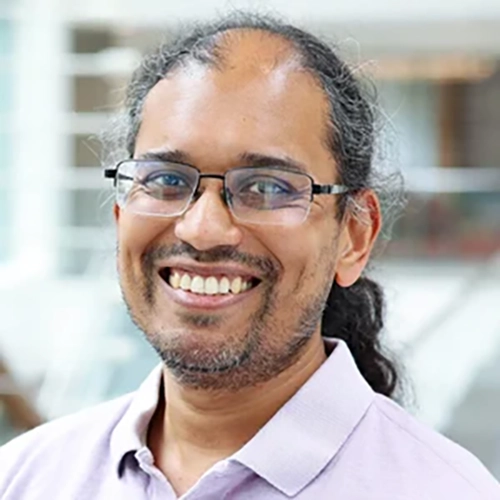
Akil Narayan
Mathematics
Akil Narayan
Mathematics
Dr Narayan can design algorithms for quantum computers that deliberately build in an element of chance. Randomness may sound like the last thing wanted in a calculation, but it makes these algorithms faster and more accurate, and keeps them working even when the demands on data and computing power are extreme.
View Akil's faculty profile
View Qilei's Bio

Qilei Zhu
Chemistry
Qilei Zhu
Chemistry
Dr Zhu studies handed molecules, which come in mirror-image left- and right-handed forms, and how they interact with electrons at a surface. That handedness can sort electrons by their quantum spin, an effect known as chirality-induced spin selectivity. His group builds materials and devices that put it to work in sensing and information technology.
View Qilei's faculty profile
View Ming's Bio
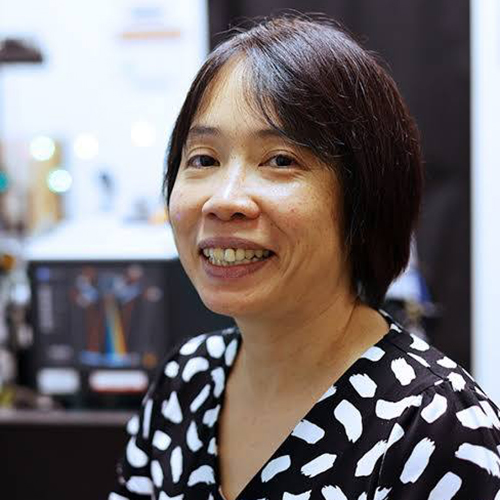
Ming Lee Tang
Chemistry
Ming Lee Tang
Chemistry
When light strikes a molecule, it can create pairs of electrons whose quantum spins line up. Dr Tang works on controlling those pairs and how they recombine to give off light again. Achieving this at ordinary room temperature would open the door to technologies that carry information with electron spin instead of electric charge.
View Ming's faculty profile
View Nick's Bio

Nick Borys
Physics & Astronomy
Nick Borys
Physics & Astronomy
Dr Borys tests promising new materials for quantum technologies by building them into prototype devices. Rather than studying the materials in isolation, his group measures how they perform against the benchmarks that a real application would demand. That practical groundwork feeds advances in quantum computing, sensing, and communication.
View Nick's Faculty profile
View Ramón's Bio

Ramón Barthelemy
Physics & Astronomy
Ramón Barthelemy
Physics & Astronomy
Dr Barthelemy studies how quantum mechanics is actually taught in physics departments across the country, looking at what goes into the courses and how well the material lands with students. His aim is a modernized curriculum, one that leaves graduates prepared for the research careers that quantum science and technology are opening up.
View Ramón's faculty profile
View Aurora's Bio

Aurora Clark
Chemistry
Aurora Clark
Chemistry
Quantum computers are unusually good at modeling how electrons behave inside molecules, a problem that strains ordinary computers. But their output is noisy and hard to read. Dr Clark focuses on interpreting what these machines report back, so that chemists can draw as much reliable information as possible from every result.
View Aurora's faculty profile
View Connor's Bio

Connor Bischak
Chemistry
Connor Bischak
Chemistry
Dr Bischak creates mirror-image, or handed, semiconductors that can control two quantum properties used to carry information: the spin of an electron and the polarization of light. His group makes them from inexpensive ingredients in solution at room temperature, sidestepping the costly extreme conditions such materials usually demand.
View Connor's faculty profile
View Peter's Bio
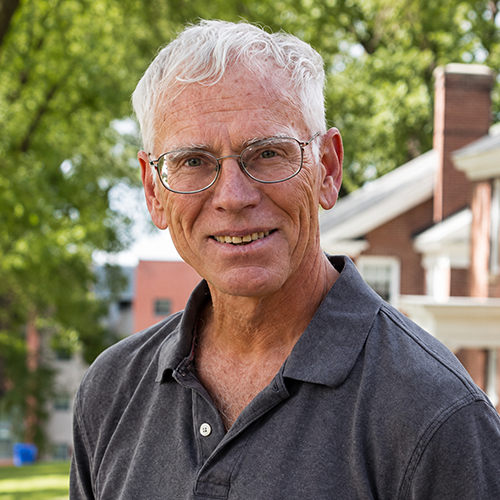
Peter B. Armentrout
Chemistry
Peter B. Armentrout
Chemistry
Dr Armentrout's group uses quantum mechanical theory to study chemical species, the reactions they undergo, and the energies those reactions involve. Because the theory describes how electrons behave when atoms meet, pairing it with laboratory measurements yields a precise picture of chemistry as it unfolds atom by atom.
View Peter's faculty profile
View Thomas's Bio
Thomas Alberts
Mathematics
Thomas Alberts
Mathematics
Dr Alberts is a probability theorist who studies the mathematics of randomness. He brings that expertise to quantum algorithms, which are probabilistic by nature: they do not return a single guaranteed answer so much as a likely one. His interest is in how reliably they can be counted on to reach the right result.
View Thomas's faculty profile
View Mengxing's Bio
Mengxing Ye
Physics & Astronomy
Mengxing Ye
Physics & Astronomy
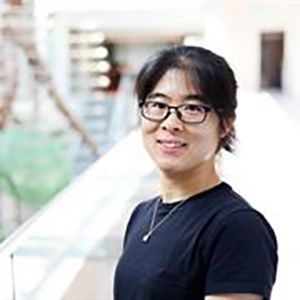
Dr Ye studies what happens when vast numbers of electrons interact inside a material and together produce behavior that none of them could produce alone, including superconductivity and unusual forms of magnetism. Understanding these emergent quantum effects sharpens our basic picture of nature and guides the search for practical quantum technologies.
View Mengxing's faculty profile
View Paolo's Bio

Paolo Gondolo
Physics & Astronomy
Paolo Gondolo
Physics & Astronomy
Dr Gondolo combines quantum field theory, which describes nature's most fundamental particles, with Einstein's theory of gravity to study the universe at both its smallest and largest scales. His work centers on dark matter, the early universe, and black holes, the places where particle physics and cosmology have to be reconciled.
View Paolo's faculty profile
View Vikram's Bio

Vikram Deshpande
Physics & Astronomy
Vikram Deshpande
Physics & Astronomy
Dr Deshpande builds tiny devices from atomically thin materials such as graphene and topological insulators, then cools them to near absolute zero and watches how electrons move through them. At those temperatures the quantum nature of electrons takes over, revealing exotic states of matter with promising uses in quantum devices.
View Vikram's Faculty profile
View Andrew's Bio

Andrew G Roberts
Chemistry
Andrew G Roberts
Chemistry
Dr Roberts collaborates with the Swanson laboratory using computer modeling to predict the three-dimensional shapes that peptides, short chains of amino acids, fold themselves into. Shape determines what a peptide can do, and the predictions rest on quantum mechanics, the physics that dictate how atoms bond and how a molecule finally settles into form.
View Andrew's faculty profile
View Michael's Bio
Michael Morse
Chemistry
Michael Morse
Chemistry
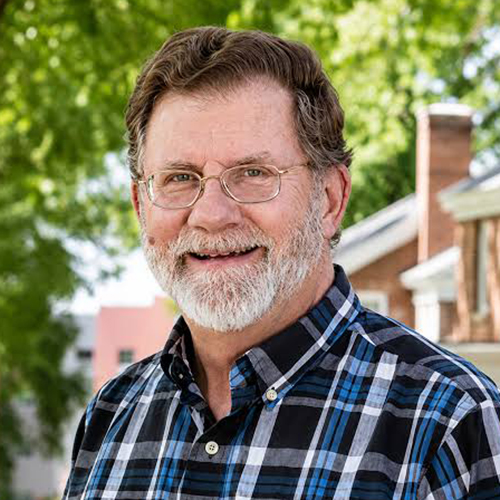
Dr Morse uses lasers to measure precisely how much energy it takes to break the chemical bonds in small molecules built around heavy metal elements. These are among the hardest molecules to model, and his measurements serve as benchmarks for quantum chemistry, the quantum-mechanical theory chemists rely on to predict how substances behave.
View Michael's faculty profile